
The 20-Minute Heist
Nov 04, 2026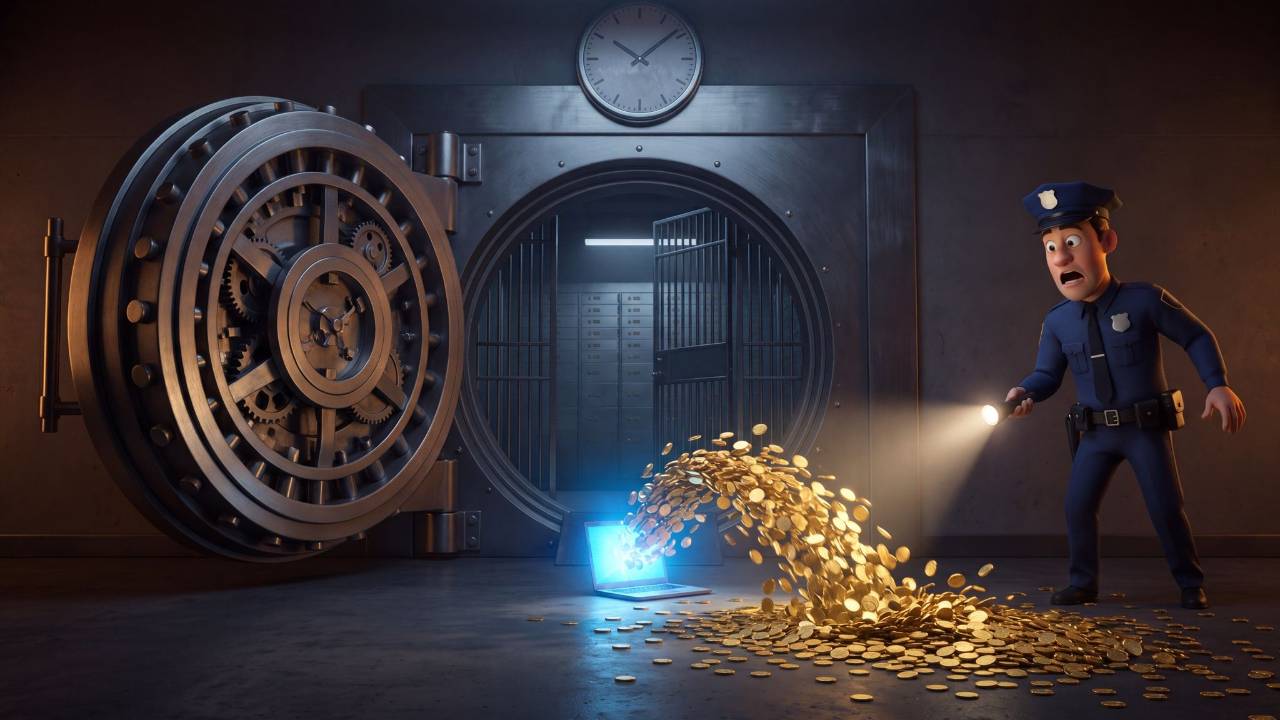
Twenty minutes.
That's how long it took thieves to move most of $6.3 billion out of Binance last Thursday, according to blockchain investigators TRM Labs. Less time than a sitcom episode.
I read their timeline twice. Not because it was complicated. Because I kept waiting for the bit where somebody noticed.
It's the largest crypto theft on record, about four times the $1.5 billion Bybit hack that shocked everyone last year. And it landed in a week when the Fed refused to budge, Big Tech had a shocker, and America heads to the polls today.
So this week: what happened at Binance, who's already trying to cash in on it (not you), and why Wall Street's new favourite crypto toy might pay its owners less than the headlines suggest.
🏦 The biggest crypto robbery ever took 20 minutes
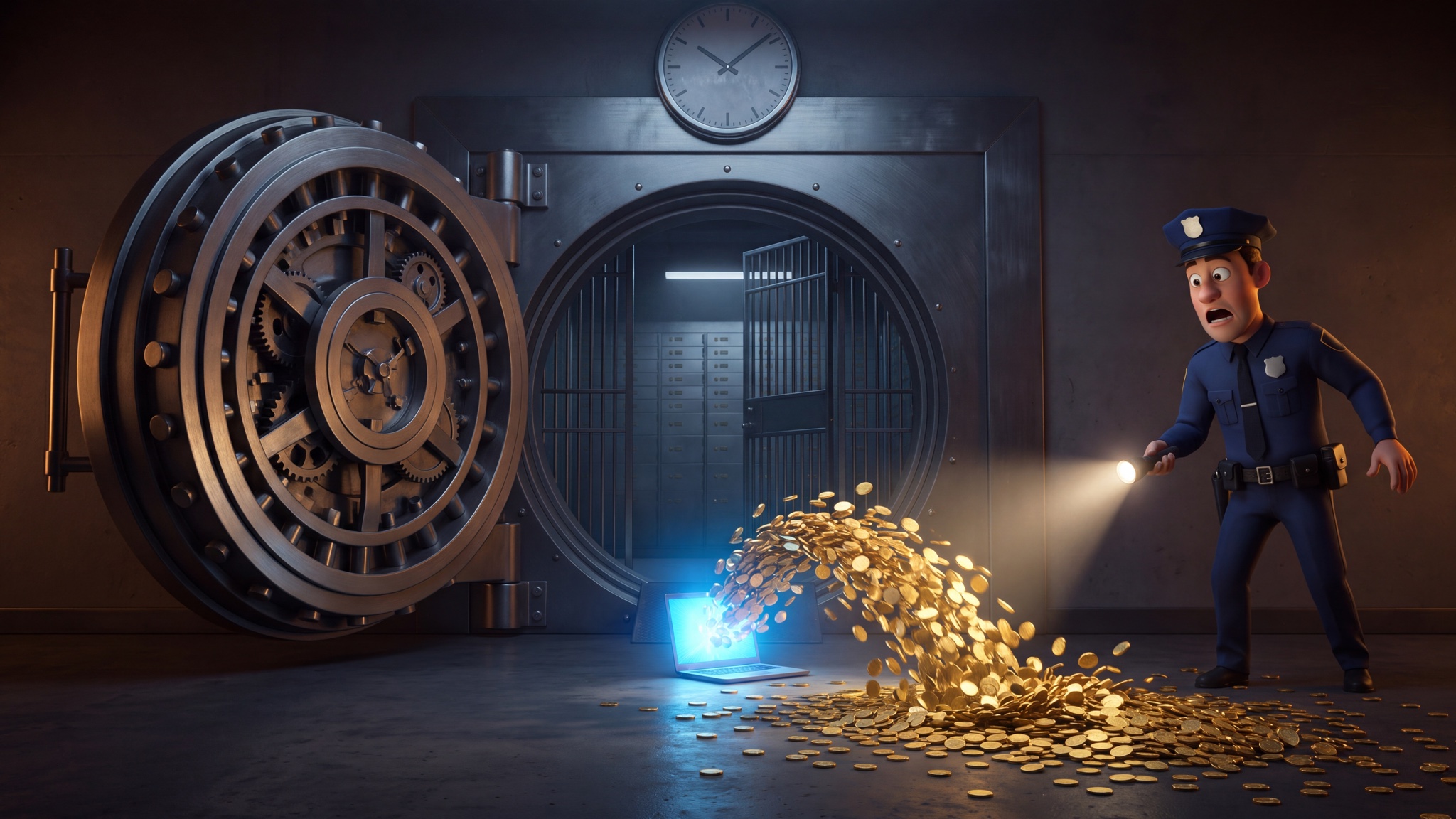
The thieves didn't crack the vault. They used the keys.
Binance says it started with one engineer's hacked laptop. From there the thieves reached Binance's “hot wallets”, the crypto it keeps online so customer withdrawals can go out fast. (A cold wallet is kept offline, and is far harder to rob.) Binance admits there were other weak spots too. It hasn't published the full story yet.
It's like a burglar who never touches your lock. He pinches the house-sitter's spare key, lets himself in, and clears the place out while the alarm stays politely quiet.
The haul came to about $6.36 billion across ten blockchains, by TRM's count. On Saturday the FBI named the culprit: TraderTraitor, a North Korean state hacking unit. Same crew it blamed for Bybit. North Korea's state media called that “absurd”.
Now the part nobody expected. Binance is paying for it. About $3 billion was frozen by partners such as Tether and Circle, the companies behind the two biggest digital dollars. By Sunday, Binance said it had replaced 95% of the stolen coins with its own money. Withdrawals reopened that day, a few coins at a time, and about $4.6 billion went out the door by mid-morning. On Monday it published a proof of reserves, a check customers can run themselves to confirm their balances are backed one-for-one.
So if the world's biggest exchange can be emptied in the time it takes to watch a sitcom, where should your coins live?
Binance had billions spare to cover the hole. Most exchanges don't. Treat an exchange like a shop, not a safe. Coins you trade can sit there. Coins you plan to hold for years are safer in a wallet you control, with the recovery phrase written on paper and kept somewhere that isn't your laptop.
| Why it matters to you: If you're in the US, you're probably on Binance.US, which is a separate company. It says it wasn't affected. But this crew has now hit two of the world's biggest exchanges in 20 months. Nobody thinks they'll stop at two. |
 The second burglar always knocks
Within days of the hack, scammers started posing as Binance to “help” worried customers.
You know the roofers who turn up the morning after a hailstorm, clipboard in hand, offering to fix damage you didn't know you had? Same trick, worse manners.
Binance has 335 million registered users. That's a lot of doors to knock on. On November 2 it put out a warning listing the tricks already doing the rounds:
- Fake support staff offering to speed up a delayed withdrawal, for a fee.
- Links to “check your compensation”. Binance says customers won't carry the loss, so there's nothing to apply for.
- Lookalike proof-of-reserves websites, and fake copies of the tool that checks them.
- Messages telling you to move your coins to a “secure” wallet.
- Requests to approve a wallet transaction to “regain access”. Approve one and the thief can empty that wallet without asking again.
Would your bank ring you up and ask for your PIN? Then why would a crypto exchange ask you to approve a transaction?
Binance says it never charges to release withdrawals and never asks you to approve wallet transactions to get back in. Use the same rule everywhere, Coinbase and Kraken included. Check your account through the official app, or a bookmark you saved yourself. Never through a link someone sent you. The scam emails don't check which exchange you use before they hit send.
🗳️ Two coin tosses in four days
Crypto's next move depends less on Binance and more on today's vote and Friday's jobs report.
Bitcoin slid below $77,000 on Friday as the hack news spread, and it was sitting near $77,000 again this morning. That's roughly 39% below its October 2025 record of about $126,000. In the first hour after the news, $628 million of borrowed bets were force-closed, and $607 million of those were bets on prices rising. Traders call that liquidation. Everyone else calls it a rotten hour.
Binance wasn't the only weight. Last Wednesday the Federal Reserve held interest rates at 3.75% to 4%, and two of its twelve voters wanted to raise them. Its favourite inflation measure rose 3.6% in the year to September, and the economy grew at a 3.4% annual pace last quarter. Strong growth plus stubborn prices means no rate cuts any time soon.
Then Big Tech wobbled. Alphabet had its worst day on record on Thursday, falling more than 12%. Intel fell 29% on Friday, its worst day since 1974. Investors are asking how much the AI building spree costs before it pays. Crypto has spent 2026 riding in the sidecar of tech stocks. When the motorbike hits a pothole, the sidecar doesn't get a vote.
The week ahead looks like this:
| When | What | What's expected |
|---|---|---|
| Today | Midterm elections | Betting markets give Democrats about a 94% chance of winning the House and about 70% for the Senate |
| Wednesday | Binance's next proof of reserves | A fresh check that customer coins are fully backed |
| Friday | October jobs report, 8:30 a.m. Eastern | 55,000 new jobs, unemployment at 4.2% |
So would a strong jobs number help Bitcoin? Oddly, no. A hot number gives the Fed a reason to raise rates again at its December 9 meeting. A soft one takes the pressure off. In this upside-down market, weak news for workers can be good news for Bitcoin.
The vote matters for a different reason. Congress still hasn't passed the big rulebook for crypto markets, and any bill that isn't law by January dies and starts again from scratch. One more thing worth knowing: Bitcoin has been higher a year after every midterm since 2014. That's three data points, which in statistics counts as gossip.
So don't make money decisions at midnight on election night. Results may take days to settle, and Friday's jobs number could move prices more than the vote.
 ⚙️ Wall Street's new crush, and who gets paid
The owner of the New York Stock Exchange is buying into Hyperliquid, but HYPE holders may see less of the money than the headlines suggest.
Hyperliquid is a crypto exchange for perpetual futures. Those are bets on a price going up or down with no end date, usually made with borrowed money. It runs on its own blockchain, and its token is called HYPE.
In May, Bloomberg reported that ICE, which owns the New York Stock Exchange, and its rival CME were pressing Washington to rein Hyperliquid in. Last Thursday, ICE bought a stake in Trade[XYZ], the biggest outfit building markets on Hyperliquid. It plans to bring those markets to American customers, if regulators agree.
It's been a busy month. Kraken's parent company said it intends to run regulated US markets on Hyperliquid, pending approval. Ripple, the company behind XRP, began offering big clients contracts that track Trade[XYZ]'s prices on more than 100 markets. Pump.fun, a meme-coin app, plugged in too, though its version isn't available in the US.
HYPE rose about 15% in the week to October 31. It has slipped since, to around $84 this morning.
Now the plumbing. Hyperliquid uses most of the trading fees it collects to buy back HYPE on the open market. More fees, more buying. So the question isn't who's using it. It's who's paying full price.
Trade[XYZ]'s markets run in a discount scheme Hyperliquid calls “growth mode”, which cuts fees by at least 90%. In August those markets handled 55% of all trading on Hyperliquid, yet earned about $5 million in fees in a month, split 50/50 with Hyperliquid.
Think of a shopping mall that gives its biggest tenant 90% off the rent to fill the place. The parking lot is packed. The rent check is tiny. At that discount, a market needs ten times the trading to pay Hyperliquid what a full-price market would.
“Headlines move the price. Fees decide what it's worth.”
Neither ICE nor Ripple has said how much of their business will reach Hyperliquid's trading books, or at what fee. Pump.fun's orders, on the other hand, go into Hyperliquid's main markets at full price.
So which partner pays HYPE holders more, the New York Stock Exchange or a meme-coin app? On today's numbers, it could be the meme-coin app. Pump.fun hasn't published its trading figures, so nobody knows yet.
| Why it matters to you: The ICE deal turns Hyperliquid from a regulator's target into something Wall Street builds on, and that counts for a lot. But both US launches still need approval, and neither has a date. If you own HYPE or are tempted, watch one thing: whether those US markets launch at full fees or at the 90% discount. Full fees, and the case gets much stronger. |
The Bit at the End Where I Try to Make Sense of It All
Thursday is Bonfire Night back home in England. The whole country sets off fireworks to remember a man who tried to blow up Parliament in 1605. Lots of bangs, plenty of smoke, and on Friday morning everyone's picking burnt-out rockets off the lawn, wondering what the fuss was about.
This week feels much the same. The Binance hack was a real explosion, and Binance paid for the damage itself. The scammers are the stray sparks that can still burn you. The vote and the jobs number will make noise. Wall Street's Hyperliquid deals sound grand, but they won't pay HYPE holders much until they launch at full price.
My guess: Bitcoin spends the week between $75,000 and $80,000, and Friday's jobs report moves it more than tonight's vote.
Get the latest news, tips, and updates!
Enter your info below to get helpful updates about how to make money from crypto.
We hate SPAM. We will never sell your information, for any reason.
