
$320m That Was Never There
Sep 18, 2026
A market note landed in my inbox on Friday morning. It told me the Federal Reserve would probably raise interest rates on Tuesday and Wednesday, and that traders were waiting nervously to find out.
The Fed raised rates on Wednesday. The note was two days behind its own headline.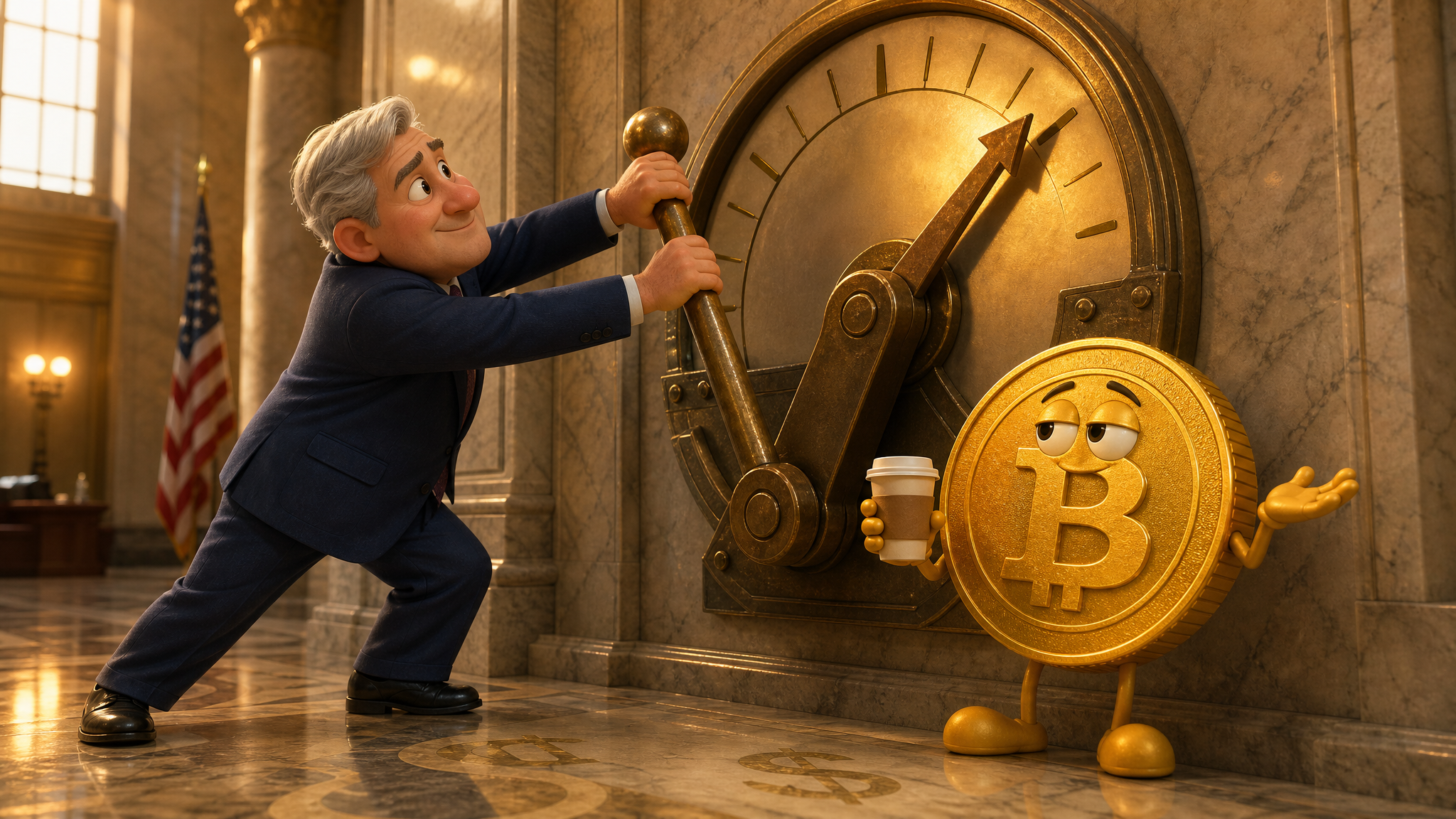
I am not picking on the writer. Crypto moves fast, newsletters get drafted in advance, and everyone in this business has shipped something stale at some point. But it did remind me how much of what we read about money is a guess wearing the costume of a report.
So here is what happened. Not what might.
On 16th September the Fed raised its benchmark rate by a quarter of a percentage point. First rise since July 2023. The vote was 12 to nothing. And Bitcoin, which was meant to fall apart, finished the week higher.
🏦 The Fed finally did the thing everyone dreaded
Rates went up, and the sky stayed exactly where it was.
The Federal Open Market Committee, or FOMC, is the group of officials who set US interest rates. On Wednesday they lifted their target range to 3.75% to 4.00%. Every single member voted yes. Chair Kevin Warsh told the press conference that inflation “is too high and has been for too long,” called the move “serious and responsible,” and made it clear he was not finished.
Think of a landlord who ignored the dripping ceiling for a year, then turns up with a wrench and a speech about how much he cares about ceilings.
The numbers gave him cover. US consumer prices rose 0.4% in August, the sharpest monthly jump since April, with gasoline up 3.9% and accounting for more than a third of the whole increase. Strip out food and fuel and you get what economists call core inflation, which rose 0.3% on the month and 2.4% over the year. The headline annual rate is stuck at 3.4%. The Fed wants 2%. It does not expect to get there until 2029.
Jobs did not help the doves either. Employers added 162,000 positions in August, well ahead of forecasts, with unemployment at 4.1%. A weak economy gives a central banker an excuse to sit still. This was not a weak economy.
So why didn’t Bitcoin fall over?
|
WHY IT MATTERS TO YOU Higher rates mean cash and government bonds pay you more for doing nothing. That is the competition for every dollar you might put into Bitcoin, and the competition got a small pay rise this week. Sixteen of the nineteen officials in that room expect at least one more increase before the year is out. Plan for more of this, not less. |
Bitcoin shrugged, and that is the real story
The news is not that the Fed hiked. The news is that Bitcoin had finished worrying about it before the Fed opened its mouth.
Bitcoin slid down from close to $80,000 at the start of the week. That drop was not the Fed. That was Congress, and we will get to Congress in a minute. By Thursday morning it had climbed back above $76,400, and as I write this it's still climbing.
The wreckage was on the other side of the trade. In the 24 hours around the decision, $345 million of borrowed-money positions were force-closed across 86,816 traders. Of that, $208 million belonged to people betting the price would fall. Everybody leaned to one side of the boat, and the boat went the other way.
The bigger money tells a more mixed story. A spot Bitcoin ETF is a fund you buy through an ordinary brokerage account that holds real Bitcoin on your behalf. Money moving in and out of those funds is the closest thing we have to a weekly attendance register for institutional buyers. Here is the register for the week of 8th to 11th September:
- $462.7 million left the funds on a net basis, ending the strongest three-week run of buying of 2026
- ARK 21Shares led the exit at $234.2 million
- Grayscale lost $129.1 million, BlackRock $52.5 million, Fidelity $50.7 million
- September as a whole was still positive at $307.3 million, so this was a wobble, not a stampede
|
Bitcoin did not ignore the Fed. It had run out of things to be frightened of before the Fed ran out of things to say. |
🏛️ Congress packed up and went home
The rulebook the American crypto industry spent two years writing died on Tuesday, eleven votes short.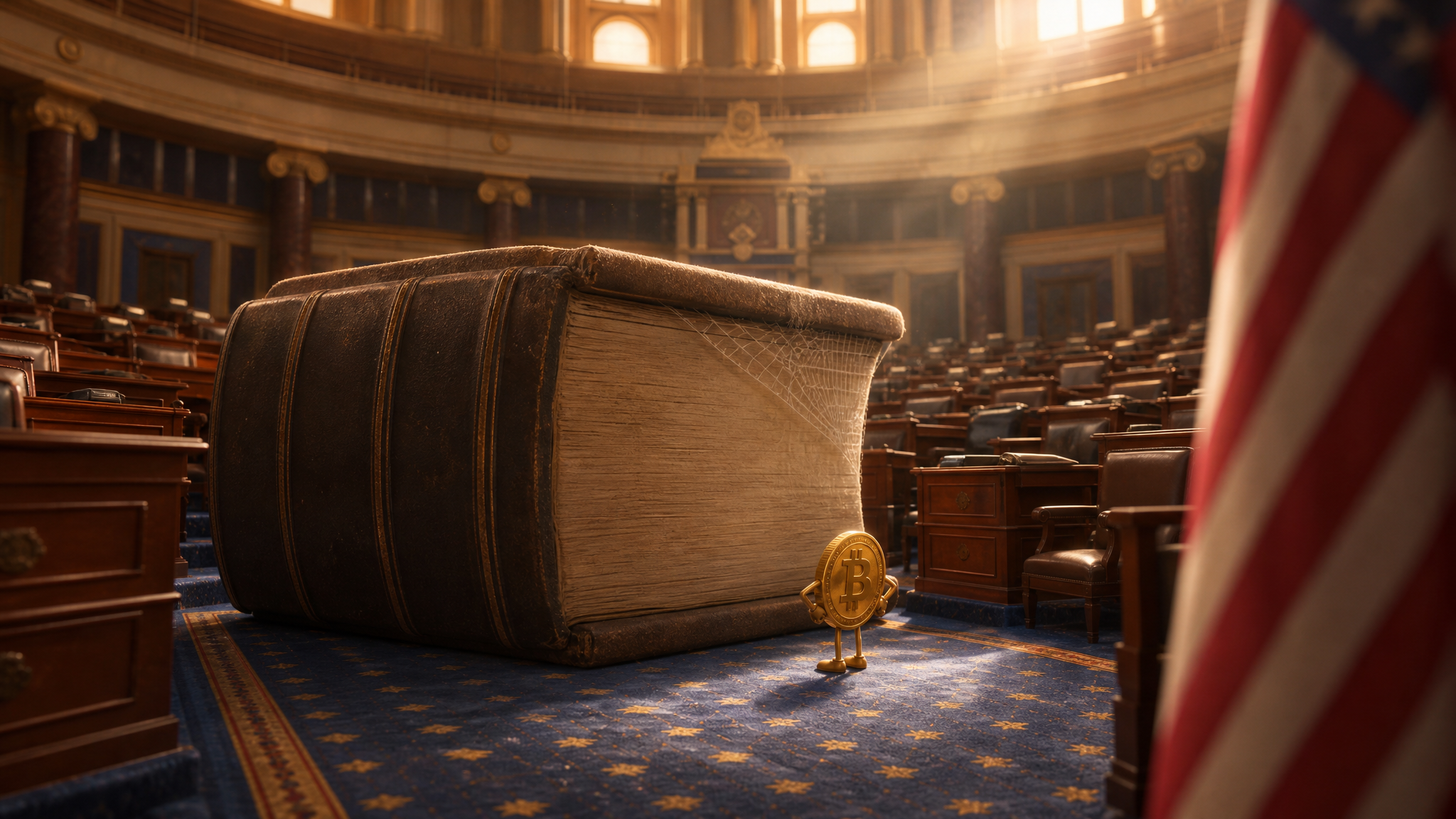
The Digital Asset Market Clarity Act, known as the CLARITY Act, would have settled the oldest argument in American crypto: which regulator is in charge of what. It ran to more than 600 pages of cross-party compromise. On 15th September the Senate voted 49 to 50 and it was over.
That was a cloture vote, which is the gate a bill has to pass through before senators are even allowed to debate it properly. You need 60 of the 100 senators to agree to open the gate. Forty-nine did. Several Republicans voted against their own side’s bill, which tells you how far the deal had fallen apart by the end.
The sticking point was not Bitcoin. It was a set of ethics clauses about whether senior government officials should be allowed to hold crypto business interests. Add an election in November and the appetite for compromise evaporated.
So does this change what you own? Not today, no. What it changes is who writes the rules you will be living under. That job now falls back to the SEC and the CFTC, the two agencies already drafting their own versions. SEC Chairman Paul Atkins has been refreshingly blunt about the problem with that: rules written by regulators lack durability without Congress behind them. Which is a polite way of saying the next lot can simply tear them up.
|
WHY IT MATTERS TO YOU Treat the tax and reporting rules you are planning around as a current draft, not a final version. Keep your own records of what you bought, when, and for how much. If the paperwork changes under you, the person with a clean spreadsheet has a bad afternoon. The person without one has a bad year. |
🔒 The $320 million that was never there
A software bug let someone create Bitcoin that did not exist, then walk out with the real thing.
On 6th September, something went wrong on the Liquid Network. Liquid is a side network built on top of Bitcoin and run by a company called Blockstream. Traders and exchanges use it to shift Bitcoin around faster than the main network allows. You hand over real Bitcoin, you get a token called LBTC, and that token is supposed to be backed one for one by coins sitting in reserve.
A flaw in the open-source software behind it, in the way the network double-checked its own math, let attackers create roughly 4,000 LBTC out of nothing. They then cashed those tokens in for genuine Bitcoin. The reserve fell from about 4,205 coins to 197. Value at the time: somewhere around $320 million.
It is the coat-check problem. Someone printed their own tickets, queued up like everybody else, and left wearing your coat.
The ending is better than the middle. Blockstream halted the network, negotiated with the people responsible, and had 3,400 coins back the following day. Around 598 coins are still outstanding. A patch went out.
Here is the part the headlines flattened. Bitcoin was not hacked. A thing built on top of Bitcoin was hacked. Those are two different sentences, and the distance between them is where most people lose money.
Where that leaves us
Three big things happened this week. A rate rise, a failed bill, and a bug worth $320 million. Only one of them moved the price, and it was the one nobody had written a preview about.
This is the British weather problem. Half the nation watches a man point at a map, then it rains on the one afternoon he promised sunshine. The forecast is not useless. It is a probability wearing a suit, and we keep mistaking it for a schedule.
My own guess for the rest of the year: at least one more rate rise, because sixteen of the nineteen people in that room said so out loud, and Bitcoin grinding sideways somewhere between $74,000 and $84,000 rather than breaking cleanly out of it. Rate cuts are the fuel for a proper run, and there are none on the timetable.
I will happily be wrong. I have been before.
Get the latest news, tips, and updates!
Enter your info below to get helpful updates about how to make money from crypto.
We hate SPAM. We will never sell your information, for any reason.
