
A war ended. Bitcoin had a nap.
Jun 22, 2026
Big week. A peace deal signed in the Middle East. The Federal Reserve made its move. And the US government pulled a famous AI company’s best models off the shelf.
Any one of those could rattle a market.
So what did Bitcoin do? It sat near $63,000 and had a nap.
That’s the part nobody warns you about. You brace for fireworks and the market hands you a damp sparkler. All that noise, and the price barely twitched.
A flat week isn’t a dull week, though. Underneath the calm, three big forces are heaving in opposite directions. Whichever one wins decides where crypto heads next.
Three forces. Let’s take them one at a time.
📈 The peace deal that hasn’t paid out yet
A war ending is good for your wallet — the money takes the scenic route.
The Iran deal is signed. Oil tankers were moving through the old blockade before the ink dried. The Strait of Hormuz — the narrow sea lane most of the world’s oil squeezes through — is creaking back open. Oil prices are sliding.
Cheaper oil means lower inflation, eventually. At full tilt, Iran could earn over $60 billion a year selling oil again. That’s a flood of new supply, and floods push prices down.
But don’t expect miracles by Friday. Clearing mines from Hormuz takes weeks. Insurers stay jittery. The first dent in inflation data is months off.
Cheaper petrol by Christmas? Maybe. Cheaper petrol tomorrow? Don’t hold your breath.
Why it matters to you: lower inflation lets the Fed cut rates, and rate cuts tend to lift risky assets like Bitcoin. The catch is the word ‘eventually.’
The Fed took the punch bowl away
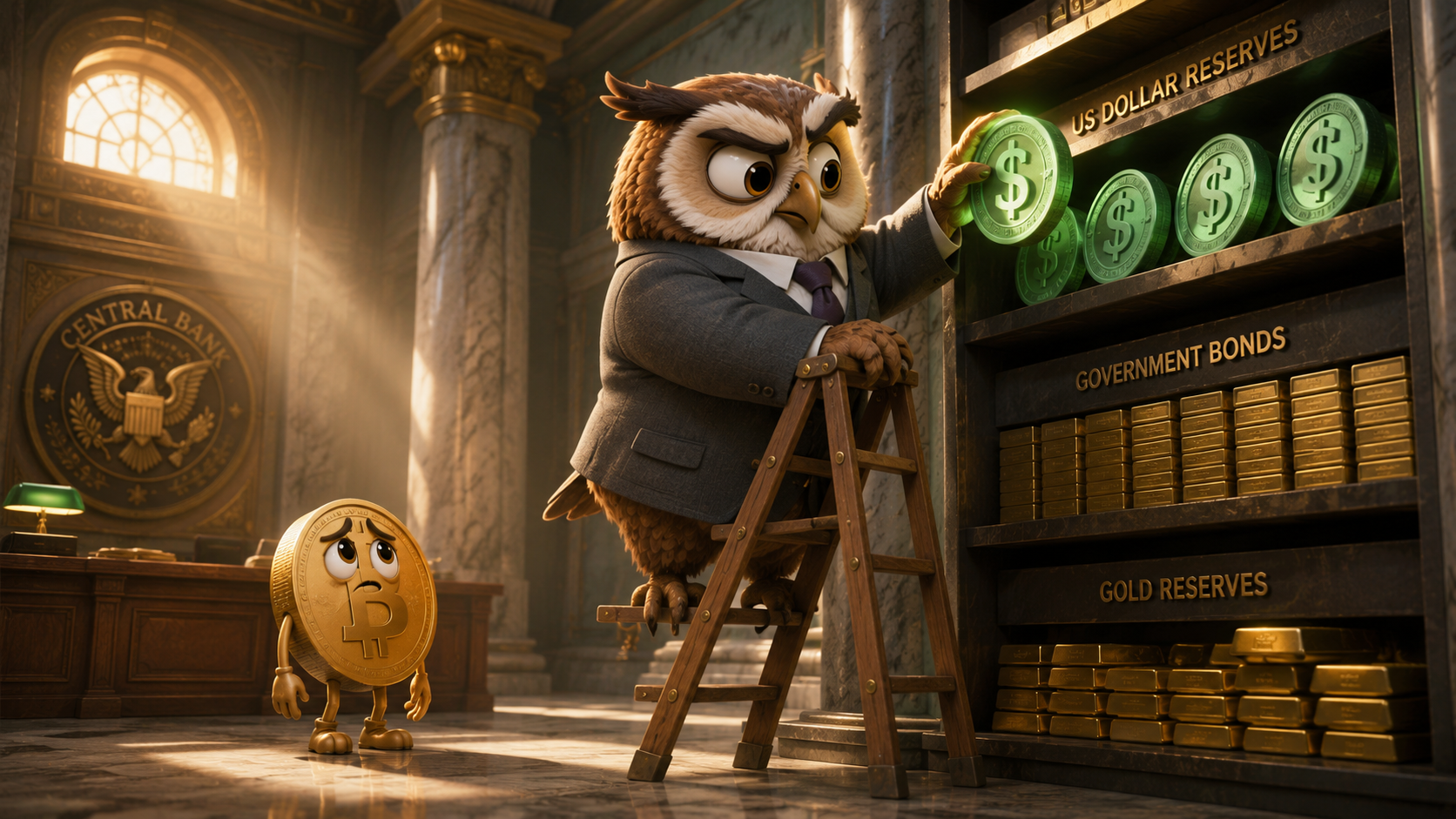
The Federal Reserve all but told us rate cuts are off the menu — and crypto noticed.
The Fed’s rate-setting committee (the FOMC, if you like initials) held rates steady. The shock was in the wording. They scrubbed every hint that cuts were coming.
Then came the dot plot — a chart where each official marks where they think rates are heading. Nearly half now expect a hike before year’s end. The odds of a September hike leapt from 30% to above 50% in a single day.
Why fret over this? Because higher US rates pull the dollar up. And a strong dollar is one of the most reliable headwinds Bitcoin faces.
Money flows to wherever it’s paid most to sit still. When the dollar pays well, Bitcoin waits in the corner.
Why it matters to you: while the Fed stays hawkish — that’s leaning toward higher rates — expect a stiff breeze in Bitcoin’s face.
🇯🇵 Japan’s quiet little time bomb
This week’s biggest risk isn’t American. It’s Japanese.
For years, traders ran a tidy trick called the carry trade: borrow yen for next to nothing, then buy higher-returning assets elsewhere. Cheap money in, profitable money out. Shares, bonds, crypto — all bought with borrowed Japanese cash.
Last month Japan’s central bank raised rates to 1%. The yen fell to its weakest since July 2024 anyway. Tokyo spent $73 billion trying to prop it up and still lost.
The worry, step by step:
- Every Japanese rate rise makes borrowed yen pricier to hold.
- That nudges traders to unwind the carry trade — sell what they bought.
- A lot of what they bought is crypto.
We’ve seen this film. In August 2024, one carry-trade unwind dragged Bitcoin from $65,000 to $50,000 in a week. Bets against the yen now sit at a nine-year high.
The fuse is laid. Whether anyone lights it is the open question.
Why it matters to you: keep half an eye on the yen. It’s the tripwire almost nobody’s watching.
“A war ended, the Fed growled, and Bitcoin had a nap.”
🤖 When did your chatbot become a weapon?
The week’s strangest story may be the one that matters most for crypto.
The US government told AI maker Anthropic to cut off access to its most powerful models for any foreign national — even its own non-citizen staff. The National Law Review reportedly called it the first time export-control powers have been aimed at a single AI model on national-security grounds. Access by a foreigner now counts as an export, as if you’d shipped a weapon overseas.
One snag: cloud systems can tell where you are, not which passport you carry. So, by most accounts, Anthropic switched the models off for everyone. And that was that.
Now the crypto angle. When the big central players get squeezed, money hunts for what can’t be. Open-weights models — AI anyone can download and run on their own machine — start to look smart. Bittensor’s TAO, the largest pure decentralised-AI token, reportedly jumped around 30% on the news. (Fair warning: TAO has its own arguments about how decentralised it truly is.)
If governments can flip a switch on the big labs, where do you think the freedom-seekers go?
Why it matters to you: a fresh crypto theme is taking shape — decentralised AI. One to watch closely, not yet one to bet the house on.
Where this leaves you
Add it up. A war ended. The Fed growled. Japan lit a slow fuse. A chatbot got reclassified as a munition. And Bitcoin shrugged through the lot.
That flat week wasn’t nothing. It was a tug of war with the rope sitting dead level — the deflationary peace deal pulling one way, the hawkish Fed yanking the other, and Japan’s carry trade waiting in the wings.
It’s the market version of a British summer. Everyone promised sunshine. We got a grey afternoon and the threat of rain.
Over the next one to three months, the recovery story still holds. But the path runs through Iran’s 60-day nuclear talks, the yen, and whether the Fed’s tough talk survives softer data. Cautiously hopeful. Not popping the cork yet.
Get the latest news, tips, and updates!
Enter your info below to get helpful updates about how to make money from crypto.
We hate SPAM. We will never sell your information, for any reason.
