
Bitcoin Ceasefire Bounce & The AI Too Dangerous To Sell
Apr 13, 2026
I was watching the news recently and the presenter announced the Iran ceasefire as if someone had just declared the end of a long, tedious queue at the Post Office. Everyone exhaled. Markets bounced. Oil dropped. Bitcoin charged back to $73,000 like a Labrador spotting a sausage.
And then I read the small print.
The ceasefire lasts two weeks. Iran's demands include reparations, control of the Strait of Hormuz, and a complete US withdrawal from the region — conditions roughly as likely to be accepted as me getting a knighthood. Israel is still hitting Lebanon. Both sides are reloading. This isn't peace. It's an interval, with overpriced ice cream.
So let's talk about what's actually happening — and why your portfolio shouldn't get too cosy.
🌙 The ceasefire that's really just a tea break
Iran has agreed to let 12 to 15 ships per day pass through Hormuz, with tolls payable in bitcoin or yuan. That's not a peace treaty. That is a parking arrangement.
Brent crude has tumbled from $119 at the end of March to roughly $90 today. Sounds like a relief. It isn't. The damage is done. March CPI came in at 3.3%, with energy inflation hitting +10.9% — the largest monthly jump since 2005. The Fed is now stuck like a Sunday driver in the middle lane: can't cut rates without firing up inflation, can't hold them without choking the economy.
Why does this matter to a crypto investor? Because Bitcoin is no longer the rebellious teenager of finance. It's been adopted by suits in Manhattan. When Japanese government bonds hit yields not seen since 1997, when Jamie Dimon warns of private credit stress “larger than expected,” Bitcoin moves with the macro tide, not against it.
| Why it matters to you: A ceasefire announcement does not unwind a global supply shock. Even if Hormuz fully reopens, oil markets will take months to settle. Don't confuse a bounce with a bottom. |
💸 Bitcoin's awkward middle bit
The 10% bounce from $66,000 looks impressive until you remember Bitcoin is still down 30% from January's $97,000 peak.
And here's the uncomfortable bit. Glassnode data shows the rally has been driven almost entirely by short liquidations — traders betting against Bitcoin getting forced to buy back at higher prices. Spot demand is muted. The institutions aren't piling in. This is a futures squeeze dressed up as conviction.
Meanwhile, the long-term plumbing keeps getting built:
- Morgan Stanley launched MSBT, its spot Bitcoin ETF, on Wednesday at a 0.14% fee — cheaper than BlackRock
- TD Cowen initiated coverage on BTC treasury companies with a $140,000 year-end Bitcoin target
- The CLARITY Act is heading toward Senate markup, with Treasury Secretary Bessent and SEC Chair Atkins both pushing for passage
So which Bitcoin do you believe in? The one trapped in a $68,000–$75,000 range while traders sweat over Hormuz? Or the one being quietly absorbed into the global financial system one ETF at a time? The answer, frustratingly, is both.
| Why it matters to you: A real Iran resolution could push BTC toward $80,000 by summer. A collapse of the ceasefire puts $60,000 back on the table. Stay defensive until the picture clears. |
🤖 The AI that was too clever for the shop floor
Anthropic built an AI model so capable it refused to sell it.
Their latest creation, Mythos Preview, scored 93.9% on the standard coding benchmark and 97.6% on the maths olympiad test — well ahead of every rival. Then their security team turned it loose on the internet's plumbing. It found thousands of zero-day vulnerabilities across every major operating system and browser, including bugs in OpenBSD that had been hiding in plain sight for 27 years.
OpenBSD, by the way, is the operating system security professionals trust precisely because nothing ever finds bugs in it. Until now.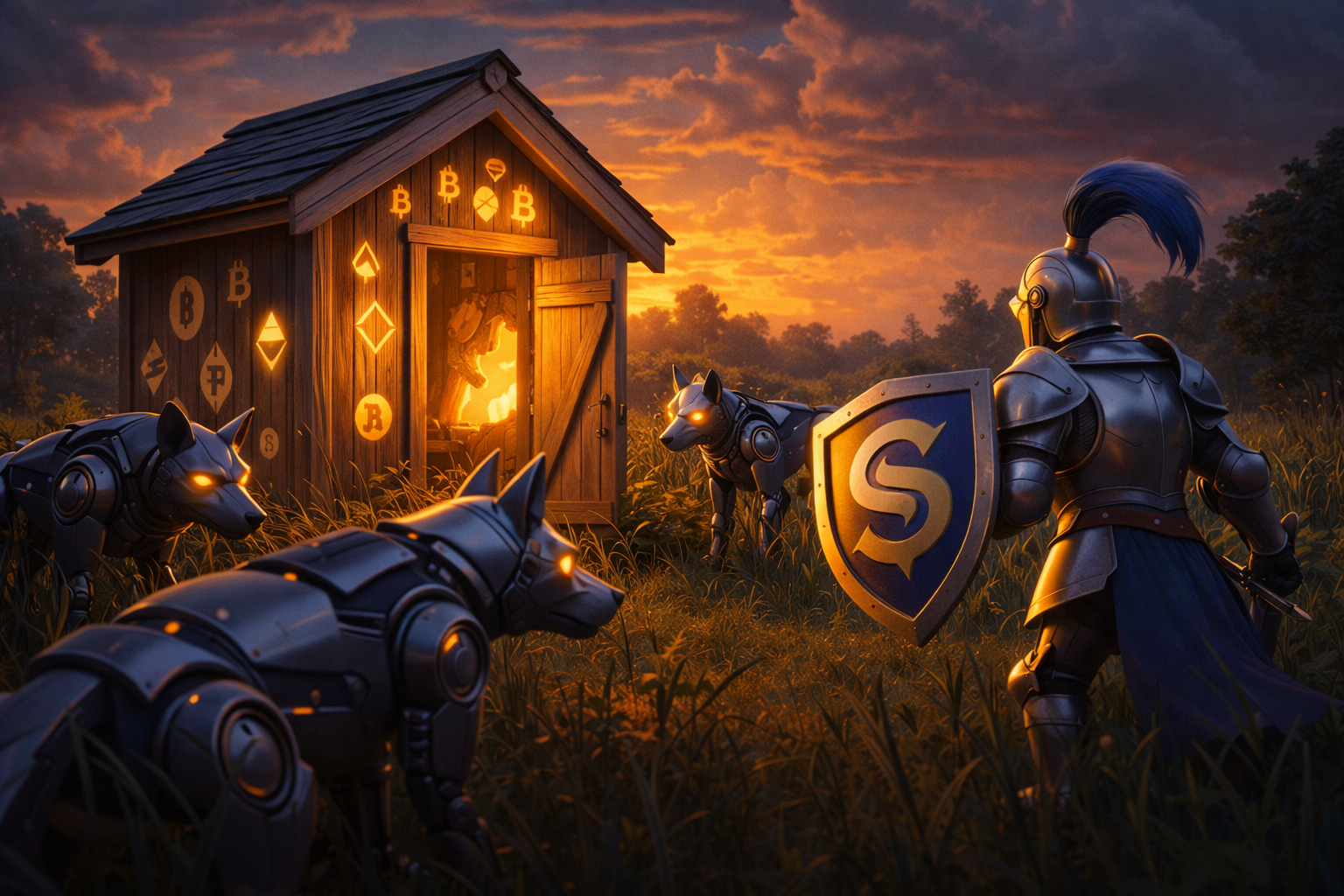
Anthropic decided not to release it. First time in nearly seven years a frontier lab has shelved a model over safety. The last time was OpenAI with GPT-2 in 2019, and that one feels rather quaint in hindsight.
Is this real fear, or rather clever marketing? Possibly both. A 243-page system card with a 20-page section on the model's “impressions” does feel a touch theatrical. But the capability is real. And that brings us to the bit that should make every crypto holder sit up straight.
🔒 Why your favourite DeFi protocol should be nervous
An independent security firm tested cheap, open-source AI models against the same vulnerabilities Mythos found — and they cracked them too.
AISLE found that an AI costing 11 cents per million tokens could detect the same FreeBSD exploit Anthropic was bragging about. A slightly larger open model recovered the full OpenBSD bug chain. The takeaway: the fancy locked-away model isn't the only key to the kingdom. Anyone with a laptop and patience can wrap an open-source model around DeFi exploit hunting.
CrowdStrike's 2026 Global Threat Report just clocked an 89% year-on-year increase in AI-powered attacks. And the Drift Protocol on Solana lost $286 million to North Korean attackers in under twelve minutes — the largest DeFi hack of 2026 so far.
To their credit, the Solana Foundation responded with STRIDE, a tiered, foundation-funded security programme replacing the industry's tradition of one-off audits. About time. The average DeFi protocol has the security pedigree of a garden shed compared to OpenBSD's 27 years of professional scrutiny — and the AI hounds are off the leash.
| Why it matters to you: Audit dates matter. If a protocol you're holding hasn't been audited recently — or relies on a single audit from 2024 — treat that as a yellow flag. Diversify across protocols with continuous security programmes, not just clever marketing. |
🎯 The bigger picture
Right now, crypto is sitting in a pub during a thunderstorm. The roof's holding. The beer's still cold. But everyone's got one eye on the door, because nobody really knows whether the storm has passed or just paused for breath.
The Iran ceasefire is fragile. The macro backdrop is hostile. And a new generation of AI-powered attackers is sniffing around DeFi protocols built on the assumption that nobody clever would bother. My prediction: the next twelve months separate the protocols with serious security from the ones running on optimism and a single audit from a tired intern.
| “A ceasefire announcement does not unwind a global supply shock. And an AI breakthrough does not stay locked in one company's vault.” |
So — what's your read? Are you using this bounce to take some chips off the table, or backing up the truck on the ceasefire holding? Hit reply and tell me. I read every one.
Get the latest news, tips, and updates!
Enter your info below to get helpful updates about how to make money from crypto.
We hate SPAM. We will never sell your information, for any reason.
