
Oil, War, and the Crypto Companies Running Out of Road
Mar 23, 2026
I spent an embarrassing amount of time this week staring at an oil price chart and a crypto chart side by side, trying to figure out which one was scarier.
The oil chart won. But only just.
See, while most people were watching missiles fly across the Gulf and assuming the world was ending, Bitcoin quietly crept past $75,000. Gold — the thing everyone’s been hoarding like it’s tinned food before a storm — actually dropped nearly 5%. And the Fed sat on its hands, voting to keep rates exactly where they are.
Something doesn’t add up. Or maybe it does, and the story is stranger than anyone expected.
Let me walk you through what’s actually happening — both in the war and in the crypto industry — because the two stories are more connected than they look.
⛽ The War That’s Being Fought With Pipelines
The Middle East conflict has quietly become an energy war — and the global economy is losing.
Iran recently struck Qatar’s Ras Laffan industrial city. If that name means nothing to you, it should. It’s the largest liquefied natural gas plant on the planet. Analysts believe the damage could disrupt global LNG supply for years.
Think of it like this. Two neighbours are having an argument, and instead of throwing punches, they’re taking turns smashing each other’s boilers. In winter. While the rest of the street freezes.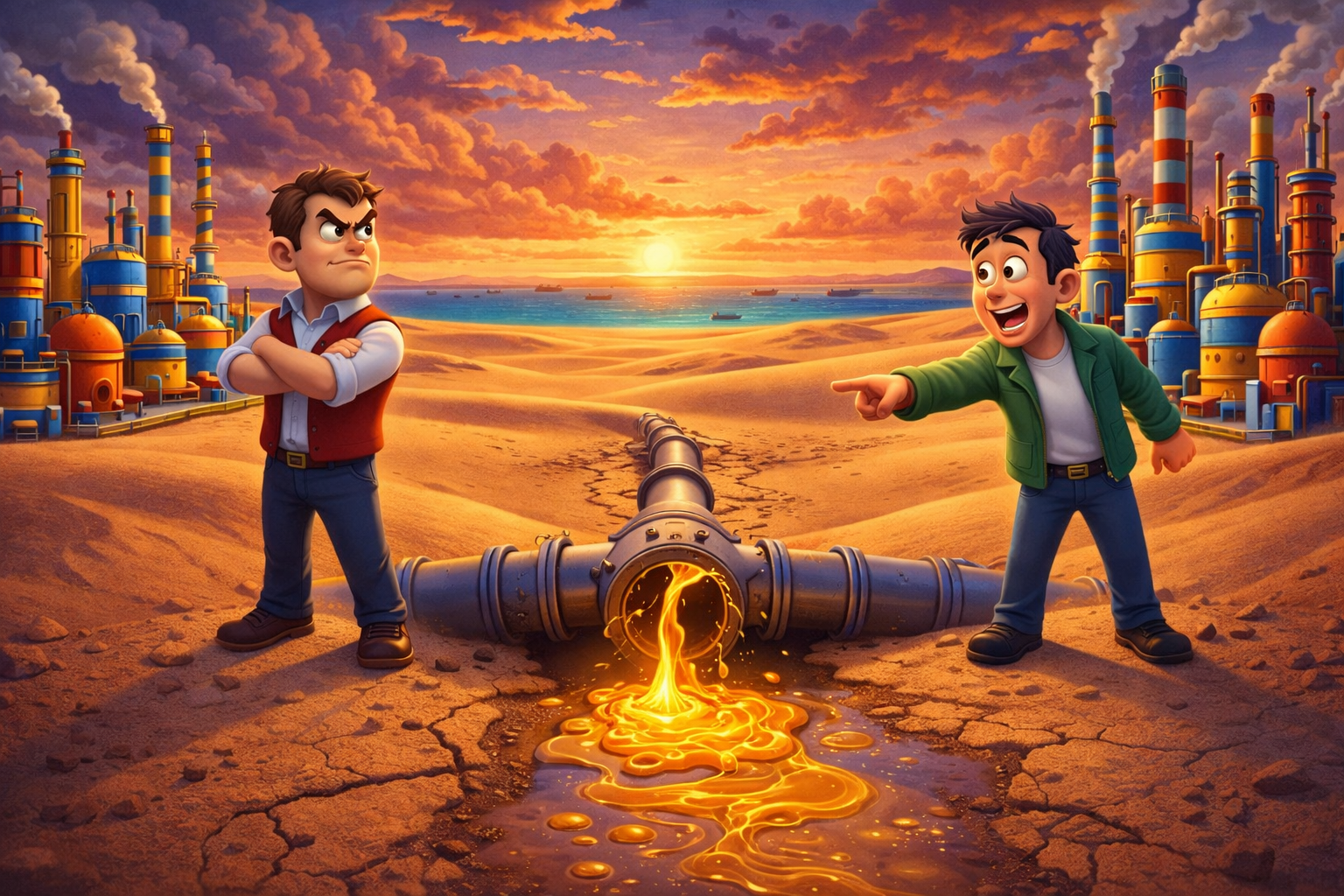
The US response has been… unusual. Washington actually removed some sanctions on Iranian oil. Read that again. Sanctions lifted on a country they’re actively fighting. That tells you everything about how desperate the energy situation has become.
So what happens next? There are really only two options.
Option one: the US puts boots on the ground near Kharg Island (where 90% of Iran’s oil exports flow). Problem is, Iran would treat that as an attack on its energy infrastructure and hit back harder. More strikes on Gulf facilities. More supply disruption. More economic pain. Plus, it’d be political poison ahead of the midterms.
Option two: some form of de-escalation. Not a peace deal. Not a ceasefire. Just enough breathing room to stop the energy bleeding.
Option two is the only one that makes sense. And that’s actually good news for your portfolio.
📈 Why the Smart Money Is Watching Iran, Not the Fed
De-escalation in the Gulf could trigger a crypto rally that catches most people off guard.
Right now, the crypto crowd is obsessed with something called the “2022 fractal” — basically overlaying old price patterns onto today’s charts to predict where things go next. It’s like using last year’s weather to decide whether to pack an umbrella tomorrow. Occasionally useful. Often misleading.
That fractal says prices should keep falling. So traders are going short. Investors are panic selling. Everyone’s bracing for impact.
Which is precisely the setup for a short squeeze — where all those bets against crypto get violently unwound when prices move up instead of down. The resulting rush of buying could push prices higher than most people expect.
Why it matters to you
The next week or two could see a meaningful bounce — not because the fundamentals have changed, but because de-escalation is the only rational move for all sides. When the grown-ups in the room finally stop smashing the boilers, markets will respond. But don’t mistake a bear market rally for a new bull run. Crypto’s four-year cycle hasn’t been broken. 2026 still looks like a bear market year. Enjoy the bounce. Don’t marry it.
A quick word on the Fed: the unexpected rise in the PPI before their last meeting took any stimulus off the table. So don’t look to the central bank for help. The only cavalry coming rides on the back of a ceasefire.
📉 The Crypto Companies That Didn’t Make It to Spring
5 firms cut staff. 3 shelved their launches. 1 went bankrupt.
All in ten days.
The names: Crypto.com, the Algorand Foundation, OP Labs (behind Optimism’s Superchain), Messari, and PIP Labs all slashed headcount — at least 10% each, with Algorand cutting a quarter of its team. Meanwhile, OpenSea delayed its $SEA token again. Tally shut down entirely. And BlockFills, a Chicago-based institutional trading firm, filed Chapter 11 after burning through roughly $75 million.
What’s fascinating is the excuse everyone’s using.
Algorand blamed the market. Fair enough. But Crypto.com, PIP Labs, and Messari all pointed to the same thing: AI. As in, “we’re pivoting to AI, so we need fewer people.” Crypto.com dropped $70 million on ai.com last month. Messari replaced its CEO with its CTO and declared itself “AI-first.”
Whether this is genuine strategy or dressed-up cost-cutting is a question I’ll leave to you. But the pattern is hard to ignore.
🏛 The Quiet Death of Governance Theatre
The DAO model — once crypto’s legal shield — is collapsing under its own weight.
Tally’s shutdown tells a bigger story than one company running out of money. Tally powered governance for over 500 DAOs, including Uniswap, Arbitrum, and ENS. It existed because, under the Biden-era SEC, “decentralisation” was a legal strategy. Projects adopted DAO structures to avoid being labelled securities.
The Trump SEC changed the rules. Regulation got friendlier. And suddenly, all those projects that built elaborate voting systems to keep regulators happy… don’t need them anymore.
The signs have been everywhere. Across Protocol proposed dissolving its DAO and becoming a US C-corporation. Yuga Labs floated scrapping the ApeCoin DAO, with CEO Greg Solano calling it “sluggish, noisy” governance theatre. Token holders are now demanding revenue sharing instead of voting rights. Turns out people prefer dividends to debate.
Can you blame them?
🧭 So Where Does This Leave Us?
Two forces are reshaping crypto right now. From the outside, geopolitics is about to hand the market a short-term gift in the form of de-escalation. From the inside, the industry is shedding dead weight — and some of it isn’t dead weight at all, just companies that built for a world that no longer exists.
The survivors will be the boring ones. Exchanges with multiple revenue streams. Stablecoin issuers with regulatory moats deep enough to swim in. Infrastructure providers so embedded in the financial plumbing that ripping them out would cause more problems than leaving them in. Mastercard’s acquisition of BVNK is a perfect example of what “survival” looks like in this cycle.
What emerges from the wreckage will be a leaner, more institutional industry. Less governance theatre. Fewer tokens launched for the sake of launching tokens. More companies that actually make money.
It’s a bit like London after the Blitz, if you’ll forgive the dramatic comparison. Messy. Painful. But what gets rebuilt tends to be better than what was there before.
The question is whether you can spot the builders among the rubble.
Get the latest news, tips, and updates!
Enter your info below to get helpful updates about how to make money from crypto.
We hate SPAM. We will never sell your information, for any reason.
