
While Crypto Crashed, These Guys Made $100k...
Dec 16, 2025
You know that feeling when someone does exactly what you asked them not to do, then insists they're not doing it?
That's basically what the Fed just pulled off.
"We're buying $40 billion in bonds every month," they announced last week. "But it's definitely not Quantitative Easing. Completely different thing. Don't even think about calling it that."
Right. And I'm not eating crisps for breakfast—I'm simply enjoying 'savory morning carbohydrates.'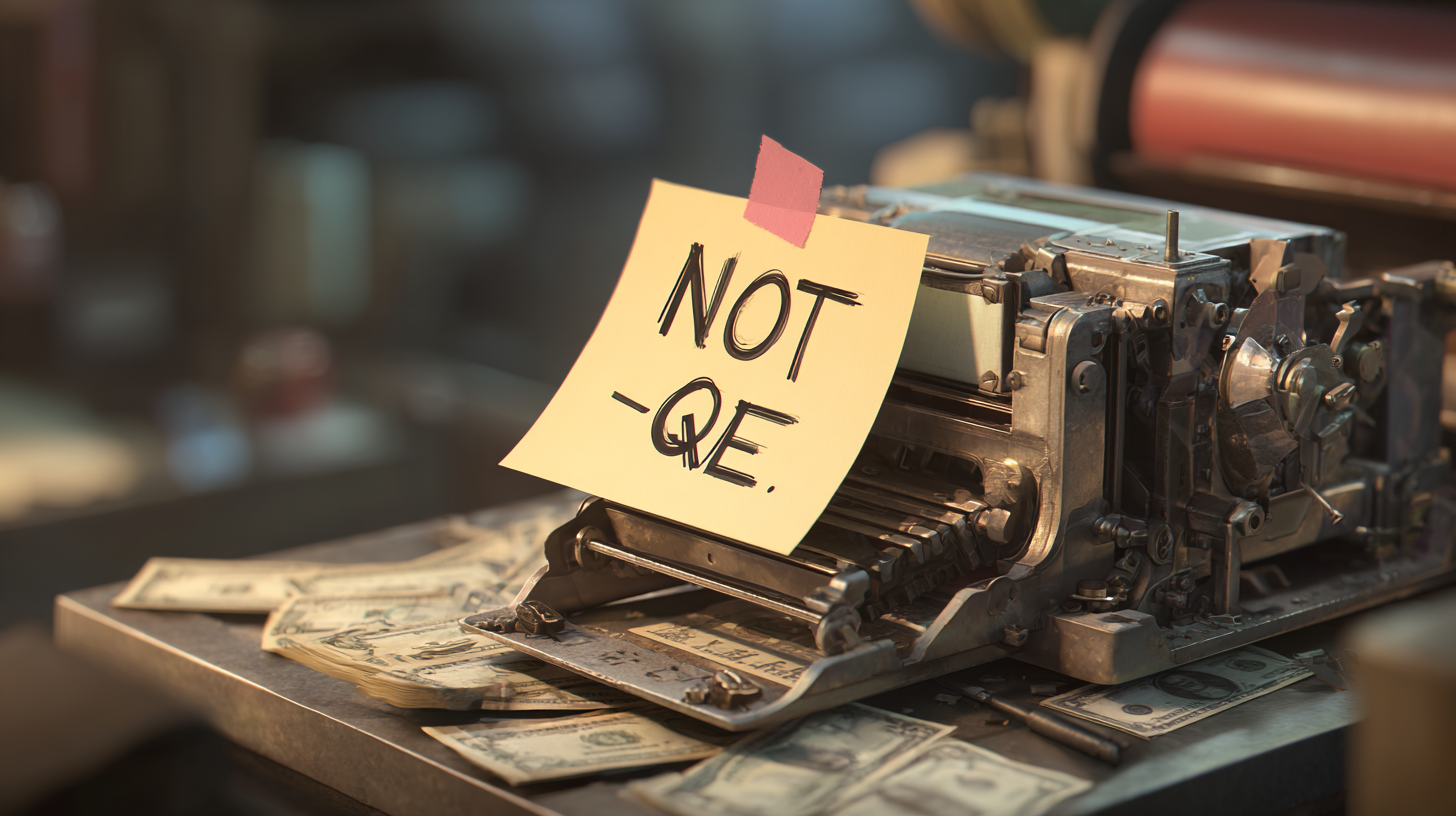
The markets, ironically, didn't care about the semantics. They rallied hard on what everyone knows is liquidity injection, regardless of what Powell wants to call it. Meanwhile, there's this absolutely fascinating thing happening in prediction markets that might be the smartest trade most people are ignoring.
Let's break down what actually matters this week.
💰 The Fed's "Definitely Not QE" Money Printer
Liquidity is liquidity, no matter what you call it.
Here's what happened: The Fed will buy $40 billion of US bonds monthly until mid-2026, specifically short-term bonds. They're insisting this isn't Quantitative Easing because "real QE" involves buying longer-term bonds to lower yields and interest rates.
But here's the thing—money is still flooding into the system. That's why risk assets like small-cap stocks (the Russell 2000 index) are on the brink of a massive multi-year breakout.
And why should you care about the Russell 2000? Because it's historically been highly correlated with altcoins. Same buyers: retail investors looking for asymmetric upside.
The big question: Does last week's bounce turn into an actual rally?
That depends on two critical data points dropping this week:
- Unemployment numbers (higher is better for markets—signals Fed will keep easing)
- Inflation data (lower is better—gives Fed room to cut rates)
Here's where it gets interesting. Powell admitted the Fed believes unemployment is worse than official data suggests, likely masked by temporary holiday hiring. So even a "good" unemployment number might not move markets much.
Inflation, though? That's the wildcard. Rents have been falling since immigration crackdowns began. Oil prices dropped sharply in November. Both are major inflation components, which suggests inflation could come in lower than expected.
But—and there's always a "but"—US CPI has been stuck around 3% for two years. Powell believes most of this is tariff-driven, which will either get struck down or become irrelevant over time.
Translation: Next week's macro data is likely bullish. Markets get liquidity injections, falling inflation, and a Fed that's more dovish than the headlines suggest.
🪙 The Tokenization Wave (And Where to Surf It)
Crypto's newest narrative is going mainstream faster than anyone expected.
Investors are rotating out of AI stocks (Oracle concerns, belief that most gains are already made) and into... well, where exactly?
Two crypto sectors are suddenly everywhere: stablecoins and tokenized assets.
Coinbase is making a big tokenization announcement Wednesday. YouTube just integrated PYUSD payments for creators. These aren't fringe experiments anymore—they're going mainstream.
So where's the smart money moving?
For stablecoins, the largest chains are:
- Ethereum
- Tron (mostly off-limits to US investors)
- Solana
- BNB (also tricky for US investors)
- Base
Realistic plays for onshore investors: ETH, SOL, and Coinbase stock (until Base gets its own token).
For tokenized assets (also called Real World Assets or RWAs):
- By distributed/tradeable RWAs: Ethereum, BNB, Solana, Arbitrum, Stellar
- By total RWA holders: Plume, Ethereum, Solana, Avalanche, Polygon
- By total RWA value: Canton, Provenance, Zksync, Avalanche, Polygon
Notice the overlap? Ethereum and Solana show up on every list. That's not an accident.
The catalyst everyone's waiting for? The CLARITY Act, which could pass before the end of 2025—sooner than markets are pricing in.
Watch these tokens closely in the coming weeks. When attention and capital flow into stablecoins and tokenization, these are the pipes the money flows through.
🎲 The Prediction Market Gold Rush (And How Sharps Are Cleaning Up)
While everyone panics about crypto prices, some traders are making $100K/month betting on probabilities.
Prediction market platforms have exploded: weekly transactions grew from 2.2M in late August to 11.4M last week. That's nearly 5x growth in under five months.
Three platforms dominate: Polymarket, Kalshi, and OPINION. And there are three types of players:
- Savers (risk-averse, slow wealth builders)
- Gamblers (thrill-seekers chasing big wins on memecoins and long-shot bets)
- Sharps (analytical traders using data and privileged info to find edges)
Here's the pattern: Retail traders (gamblers) love betting on low-probability outcomes. They consistently lose money. Meanwhile, sharps exploit these inefficiencies and make consistent profits.
Sound familiar? It's exactly like memecoin trading—retail becomes exit liquidity for sophisticated players.
Two strategies actually work:
Strategy #1: Scalping
Make small gains (1-3%) with large capital in short timeframes. Methods include:
- Cross-platform arbitrage (4% price differences between Polymarket and Kalshi)
- Mutually exclusive event arbitrage (bet YES on Trump AND YES on Democrats—profitable if combined price is under $1)
- Late-stage bidding (contracts dump to 96% right before resolution due to black swan fears)
Most sharps use bots for this. It's complicated for retail.
Strategy #2: Wallet Tracking
Follow whales who have privileged information. Recently, two whales had early access to Google's search trends and TIME's Person of the Year. They absolutely crushed it.
You can identify these wallets by monitoring order books on trending contracts and checking their historical activity. Or—easier option—follow X accounts that track them. Two good ones: @Tomdnc and @igorizuchaetcrypty.
The Bottom Line (In Proper English)
Look, the setup is cleaner than it's been in months.
The Fed's injecting $40 billion monthly (call it what you want). Inflation's likely coming in softer. Unemployment data won't matter much even if it's ugly. The Santa Rally technically begins in two weeks, and crypto has actual catalysts beyond "number go up."
Stablecoins and tokenization are going mainstream. Ethereum and Solana are positioned to capture most of that flow. And while everyone's glued to price charts, a small cohort of traders is quietly making six figures monthly on prediction markets by simply being less emotional than retail.
It's a bit like watching a queue at a British train station, really. Everyone's standing in the wrong line, complaining about the delays, while a handful of people who actually checked the timetable are already boarding the express.
The next two weeks should be mildly bullish. The two weeks after that—when the Santa Rally properly kicks off—could be properly explosive.
Get the latest news, tips, and updates!
Enter your info below to get helpful updates about how to make money from crypto.
We hate SPAM. We will never sell your information, for any reason.
