
Your Crypto Portfolio Called. It's Not Happy.
Feb 09, 2026
Well, the entire market's been having what the British call "a challenging time" (translation: absolute chaos). Between geopolitical drama and Trump's new Fed chair nominee Kevin Warsh apparently being allergic to printing money, it's been quite the week for those of us watching our portfolios shrink faster than British summer.
So let's have a proper look at what's actually going on, shall we?
The Epstein Files: Because Crypto Needed More Drama
The uncomfortable truth: Jeffrey Epstein had his fingers in the crypto pie, and now everyone's scrambling to figure out how deep they went.
Think of the recent Epstein file dump as rather like discovering your favourite restaurant has hygiene violations—suddenly everything feels a bit dodgy. The crypto world has been mentioned several times in these files, leading to the sort of wild speculation that makes Brexit debates look positively civilized.
Here's what we actually know versus what the internet thinks it knows:
- Epstein did have connections to early crypto development (though perhaps not as extensively as conspiracy theorists suggest)
- Several crypto personalities appear in the files
- The extent of his influence remains unclear (much like British railway timetables)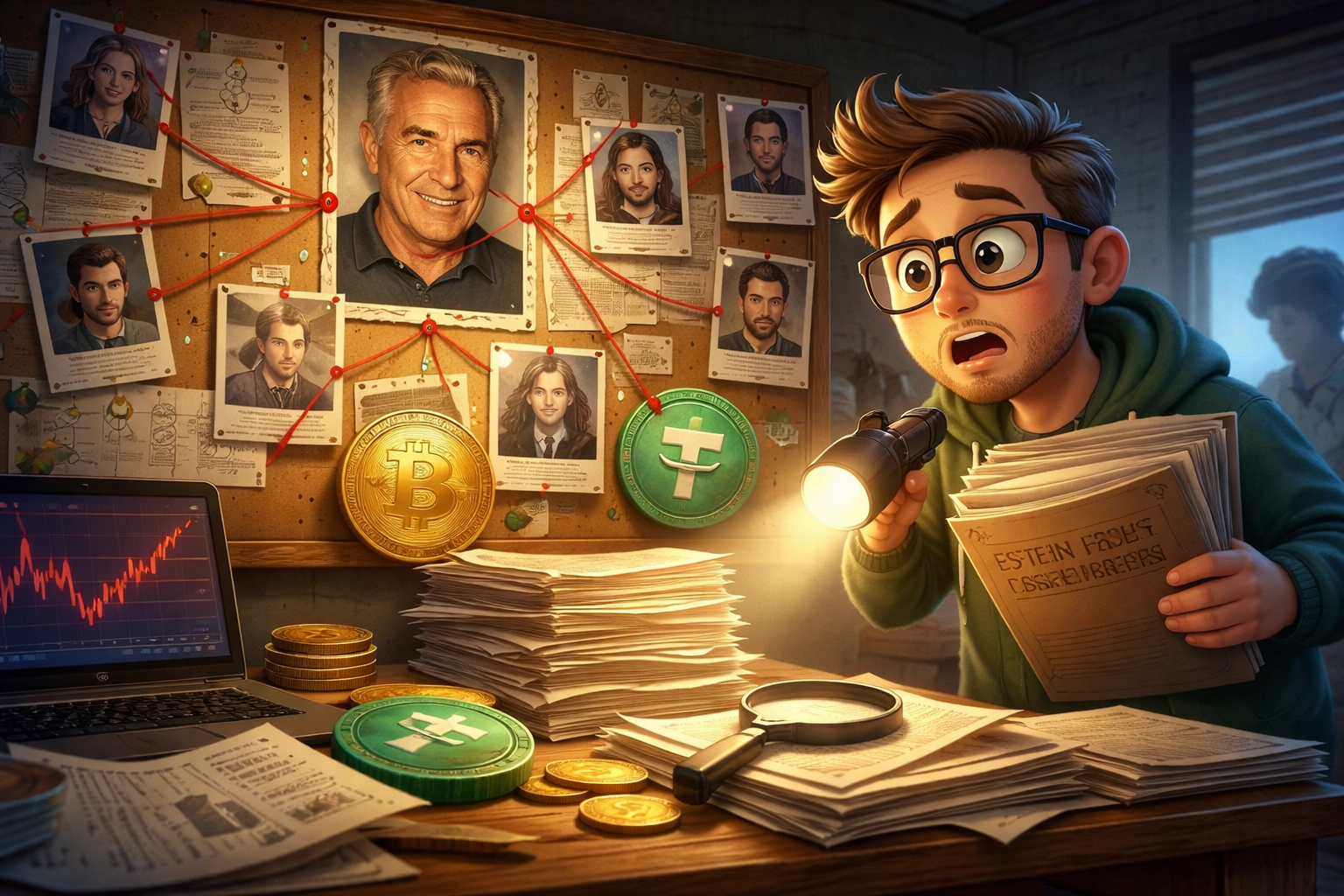
What does this mean for you?
Probably not much directly, but it's another reputational black eye for an industry that's had more than its fair share. Rather like finding out your eccentric uncle was actually quite dodgy all along.
The Liquidation Cascade: A Very British Disaster
We're watching a slow-motion car crash fueled by borrowed money, forced selling, and a shocking lack of liquidity.
Imagine you've borrowed money against your house to buy more houses (already questionable judgment), and then house prices start falling. Now you're being forced to sell everything just to stay afloat. That's essentially what's happening in crypto right now, except instead of houses, it's Bitcoin and Ethereum.
The numbers are rather grim:
- Massive long liquidations hit the market last week
- Both DeFi and CeFi platforms saw forced selling
- Binance announced it would buy $1 billion in Bitcoin over 30 days (and spent half immediately)
Here's where it gets interesting, in that "watching a disaster unfold" sort of way: Binance appears to be desperately trying to prevent Bitcoin's price from falling further to avoid liquidating other large players. It's like watching someone try to bail out the Titanic with a teacup—admirable effort, questionable effectiveness.
The conspiracy angle:
Some analysts reckon crypto prices are being deliberately suppressed to force these liquidations. Think of it as financial warfare, except instead of tanks, they're using liquidation cascades. These liquidation levels are visible on-chain, which means anyone with the right tools can see exactly where the pressure points are.
Why hasn't the price found support on the way down? Three words: shortage of liquidity.
The Private Credit Problem: When the Well Runs Dry
Crypto disconnected from global liquidity last summer, and the consequences are now becoming painfully apparent.
Remember how crypto was supposed to be this revolutionary alternative financial system? Turns out it still needs money from the traditional system to function properly. Who knew? (Everyone, actually. Everyone knew.)
Here's the chain of events:
1. Crypto companies couldn't borrow from traditional banks (banks being rather sniffy about the whole thing)
2. They turned to private credit instead
3. Private credit started experiencing its own problems
4. Crypto lending disappeared faster than British sunshine
5. Liquidity dried up, creating the mess we're in now
This explains why so many crypto treasury companies suddenly appeared last summer—they were either trying to replace that lost liquidity or (cynics might suggest) providing exit liquidity for insiders. Either way, these companies are now under tremendous pressure, rather like a soufflé in an earthquake.
The macro picture isn't helping either:
- January employment data came in weaker than expected
- The unemployment print got delayed (officially due to government shutdown, unofficially... who knows?)
- Stock markets are falling, taking crypto down with them
Wednesday's unemployment numbers will be telling. Analysts expect 4.4%, same as December. But given seasonal hiring patterns, that seems optimistic at best and delusional at worst.
The Silver Lining: Hyperliquid Defies Gravity ✨
Not everything is collapsing—one project is actually thriving through technical innovation and reduced supply pressure.
In the midst of this carnage, Hyperliquid has been posting impressive gains. It's rather like finding a pub that's still serving during a flood—unexpected and genuinely heartening.
The reasons are straightforward:
- Technical innovations that actually work (novel concept, that)
- Reduction in supply overhangs
- Strong fundamentals when everyone else is running on hope and borrowed money
Does this make Hyperliquid a safe harbor? Maybe. Or perhaps it's just the last domino to fall. Time will tell, as it inevitably does.
Conclusion
So here we are: crypto markets drowning in leverage, gasping for liquidity, while the macro backdrop deteriorates like a Victorian novel's protagonist. The unwind of all this borrowed money creates the sort of mechanical selling that's devilishly hard to stop—rather like trying to halt a runaway train with strongly worded letters.
There's a possibility of a short squeeze if we get a small bounce (and we likely will, because markets rarely move in straight lines), but the fundamental problem remains: too much debt, not enough money, and a deteriorating economic picture.
The forward view:
This week could get considerably worse before it gets better. The unemployment numbers on Wednesday might be the catalyst for another leg down, or they might surprise us all. Either way, we're watching a proper unraveling of leverage, and those rarely end tidily.
Think of it as the financial equivalent of British weather—it's probably going to get worse before it gets better, but complaining about it is part of the experience.
What's your take on all this?
Are you riding it out, buying the dip, or running for the hills? Hit reply and let me know—I promise I won't judge (much).
Get the latest news, tips, and updates!
Enter your info below to get helpful updates about how to make money from crypto.
We hate SPAM. We will never sell your information, for any reason.
